Start with the relationship to the space
A pendant over a table, a decorative feature in a room and a sculptural suspension in a taller volume have different relationships with people and architecture. Consider the proportions, suspension position and views across the room before settling on the appearance of the light alone.
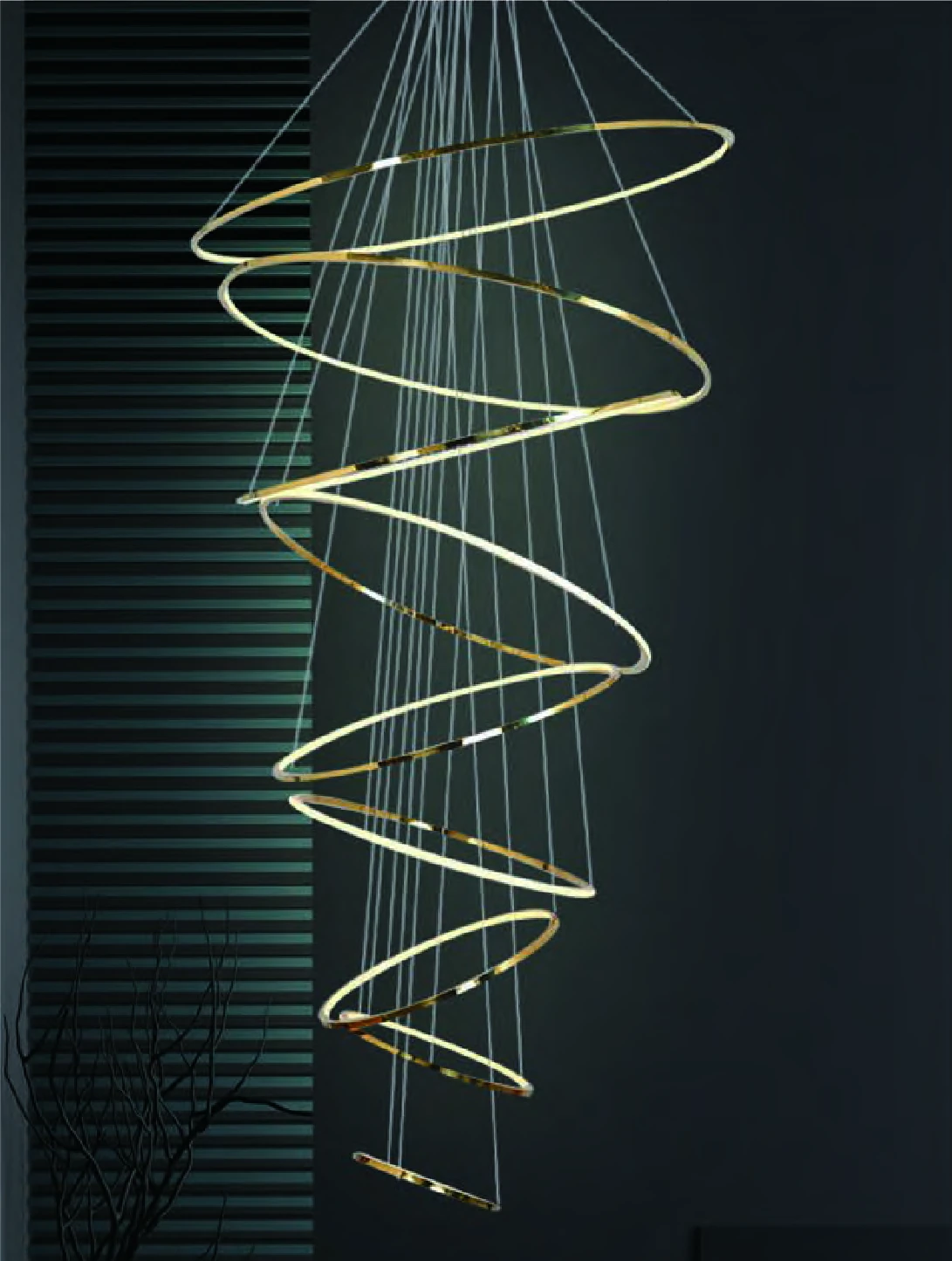
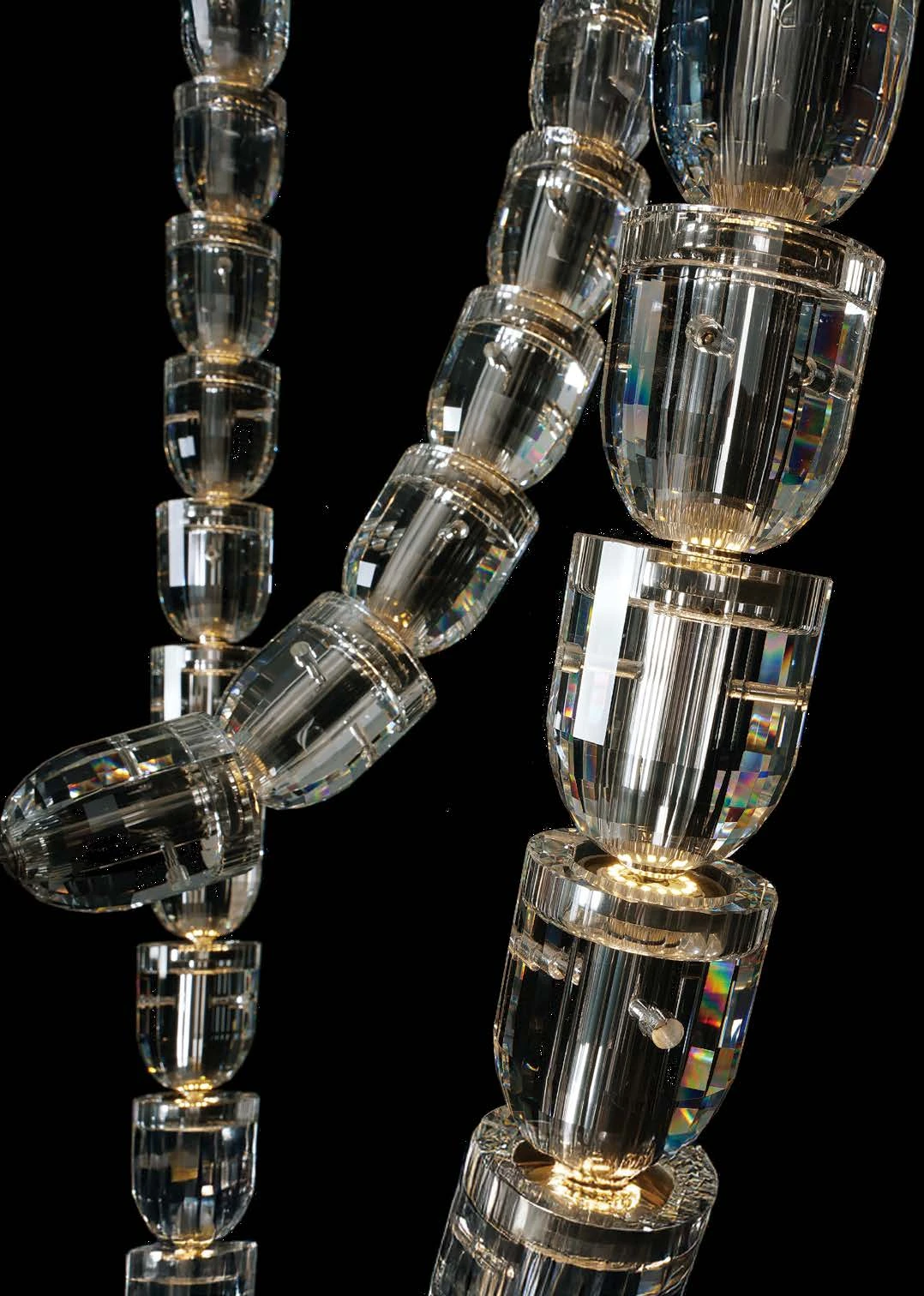
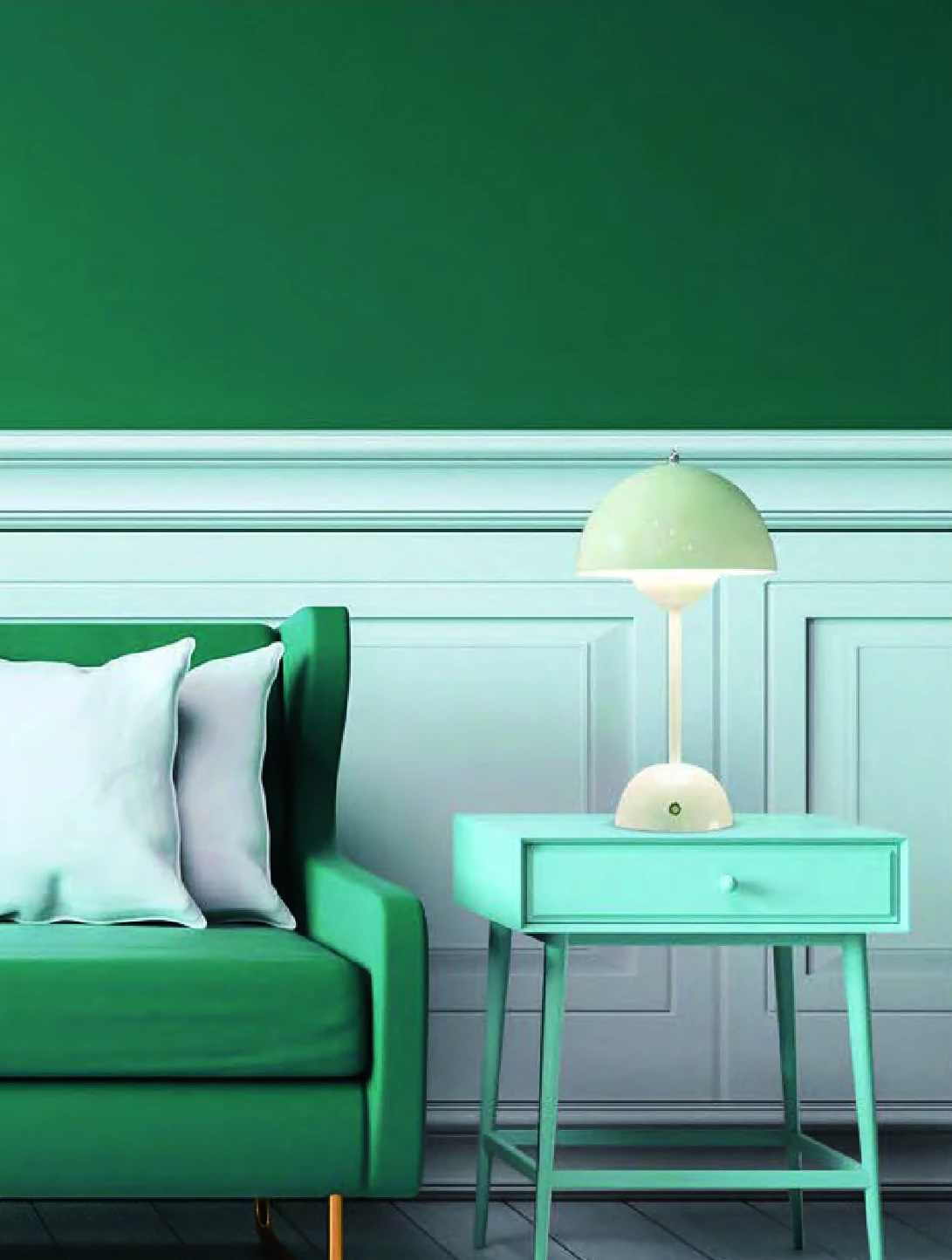
The supplied references explore track-mounted glass pendants, a textured disc pendant, metal and leather finishes, and a sculptural crystal suspension. These chandelier and pendant directions help discuss scale, material and the relationship to the rest of the lighting.
Let form and useful light work together
A decorative fixture can be a visible focus without being responsible for every lighting task. Decide whether it should light a table, contribute to the surrounding atmosphere or sit alongside separate task and accent layers. That choice affects the source, shielding and relationship to the rest of the scheme.
Look at the fitting from the positions people will occupy, including a seated view. A luminous element that feels comfortable in one setting may need a different placement or supporting layer in another. Review the intended effect rather than assuming a sculptural form provides a particular beam or output.
Compare finishes with real materials
Metal, leather, clear glass and textured surfaces can change the visual weight of a fixture. Bring the room’s timber, stone, fabric and paint references into the selection. Consider how the finish looks in daylight as well as under the proposed lighting.
Where a customised detail is discussed, agree the form, finish and physical constraints with the lighting requirement. The prismatic-glass concept study shows a design direction; it does not establish the dimensions, material specification or performance of a real product.
Compare pendant sizes and suspension
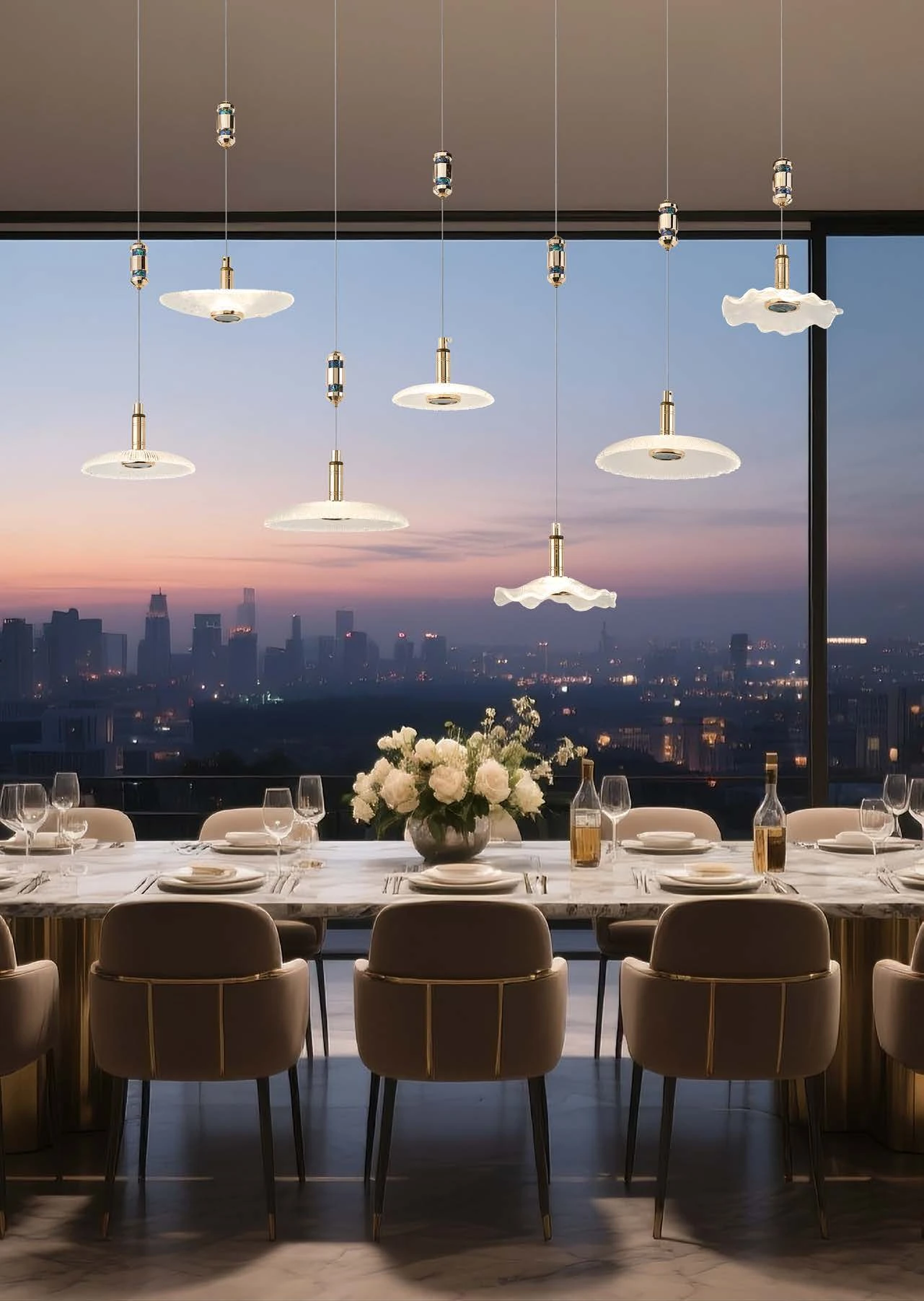
Textured disc pendant
A compact pendant with gold-tone hardware, individually cable-suspended. The round disc comes in Ø130, Ø150 and Ø180 mm, each with a listed height of 1,200 mm. Consider a single pendant over a small table or a group over a counter, with task lighting where needed.
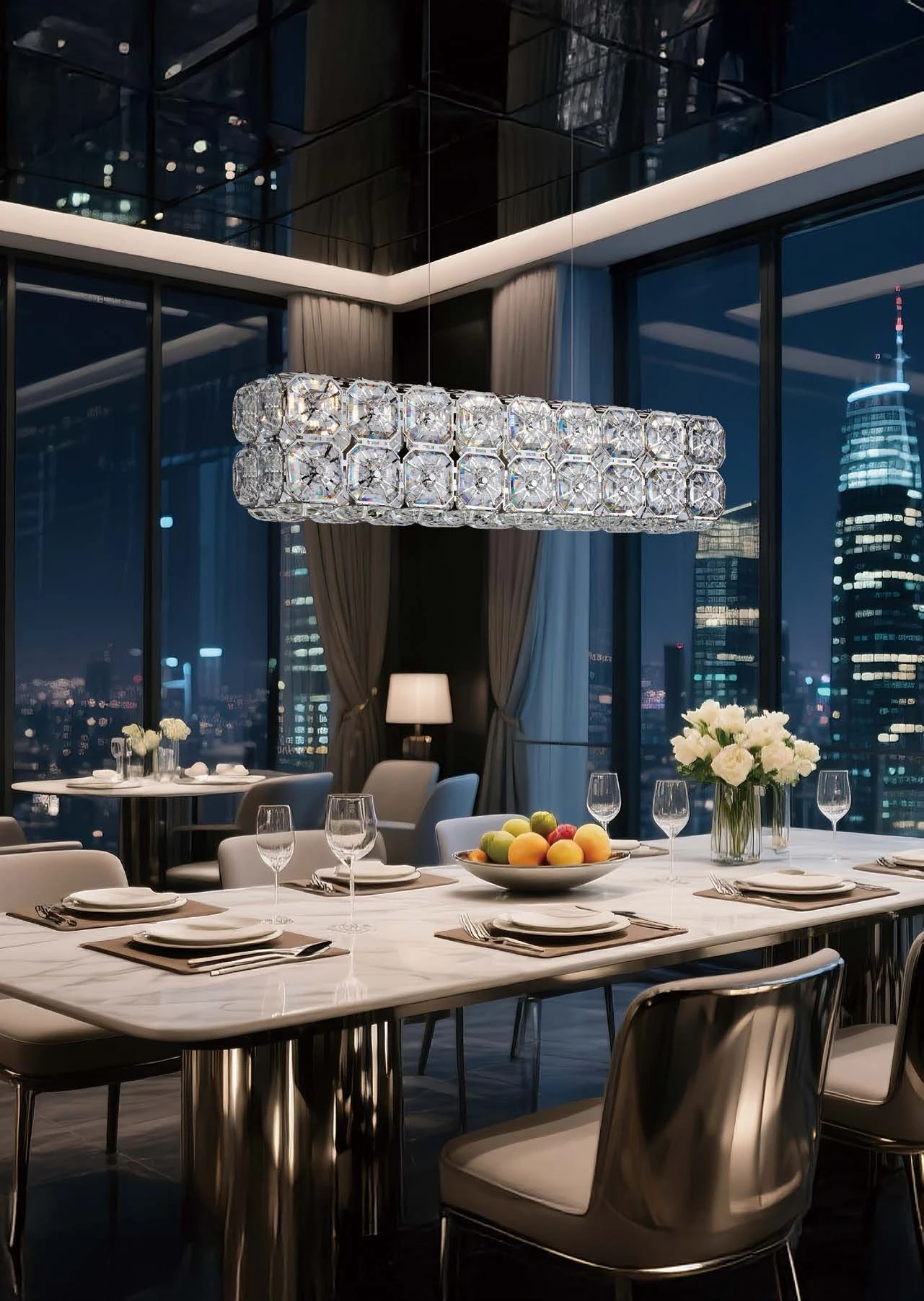
Linear crystal pendant
A two-cable suspension with faceted crystal and chrome-finished stainless steel. The listed sizes are 940 × 130, 1,050 × 130 and 1,050 × 250 mm, each with a listed height of 1,000 mm. Consider it as a centrepiece over a long dining table or in a hospitality setting.
Confirm the finished drop and ceiling fixing against the project drawing.
Complete the room, not just the centrepiece
Layer decorative pendants with the light needed for circulation, tasks and materials. Coordinate the source and dimming behaviour with the rest of the lighting so that a scene can feel balanced at the levels people actually use.
Share the room or drawings, furniture positions, ceiling heights and material references. Enlighto develops the selection around that brief, with consultancy supporting the lighting solution. Exact product details, suspension requirements and control compatibility are confirmed for the proposed fitting.